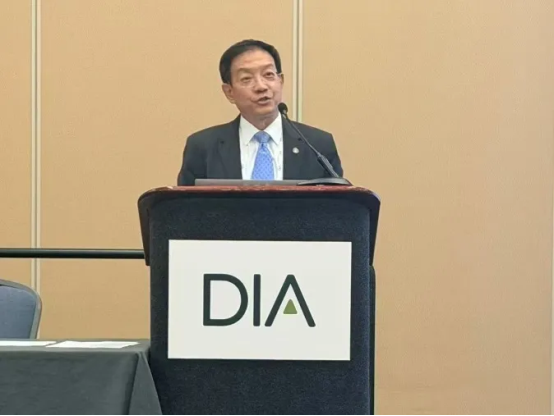
The China Town Hall took place on the afternoon of June 16, 2026, US Eastern Time, during the DIA 2026 Global Annual Meeting. The room was full, with nearly 200 pharmaceutical-company representatives, regulators, investors and other participants gathering to discuss recent developments in China's pharmaceutical industry.
The session was chaired by Dr. Ling Su, a DIA Global Fellow.
First, Shi Hui, head of development research at the China Center for Food and Drug International Exchange, described the National Medical Products Administration's (NMPA) international exchanges and cooperation in drug regulation. She explained that China was participating more fully in the global regulatory system through cooperation at multiple levels, while pursuing institutional opening to create a more open and efficient development environment for pharmaceutical companies worldwide.
1. An expanding global regulatory cooperation network
Shi Hui said that the NMPA was expanding cooperation with drug regulators in Belt and Road countries and the BRICS group, strengthening exchanges on regulatory-policy coordination, alignment of laws and regulations, capacity building, mutual recognition of market-access standards, and post-marketing supervision. China had also maintained long-standing communication with the World Health Organization (WHO), participated actively in global pharmaceutical governance, and been elected to the Management Committee of the International Council for Harmonisation of Technical Requirements for Pharmaceuticals for Human Use (ICH) for three consecutive terms. She said China had adopted and implemented all ICH guidelines and was actively pursuing membership of the Pharmaceutical Inspection Co-operation Scheme (PIC/S) to achieve closer alignment with international standards. In traditional Chinese medicine, the NMPA was promoting international harmonisation of pharmacopoeial standards for herbal materials and had led the establishment of the Western Pacific Regional Forum for the Harmonization of Herbal Medicines to support the integration of traditional medicine globally.
Shi Hui outlined further institutional-opening measures intended to improve regulatory transparency and international participation. These included comprehensive support for multiregional clinical trials (MRCTs), improvements to review and approval procedures for new medicines developed overseas, and exploration of pilot arrangements for cross-border, segmented manufacturing of biological products. She said these measures would shorten the time to market for innovative medicines in China and give multinational companies greater flexibility in manufacturing and supply-chain planning.
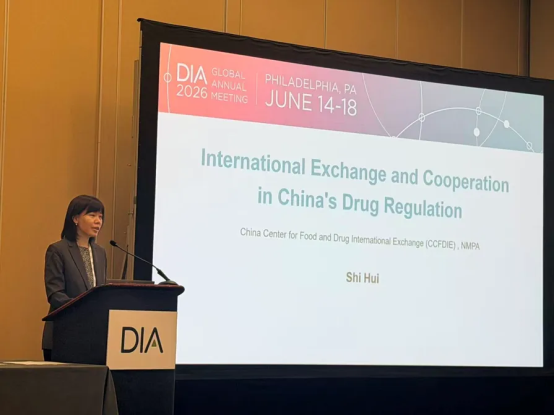
Image text and data — DIA 2026 presentation: international regulatory exchange
The slide is titled International Exchange and Cooperation in China's Drug Regulation, presented by Shi Hui of the China Center for Food and Drug International Exchange (CCFDIE), NMPA. The header identifies the DIA Global Annual Meeting in Philadelphia, 14–18 June 2026.
Shi Hui, head of development research, China Center for Food and Drug International Exchange
Zhou Huijuan, from the exchange department of the China Center for Food and Drug International Exchange, then discussed progress in China's drug-regulatory reforms. She described how improvements to laws and regulations, review and approval procedures, and technical guidance had advanced alignment with international practice, with results beginning to emerge.
She reported that the revised Regulations for Implementation of the Drug Administration Law took effect on May 15, 2026. The revisions explicitly supported clinical-value-oriented drug development, improved registration review and approval, established accelerated marketing-registration procedures, clarified re-registration procedures, provided market exclusivity for qualifying paediatric and rare-disease medicines, and introduced data protection for medicines containing new chemical ingredients and certain other products. The 2025 edition of the Pharmacopoeia of the People's Republic of China was published in March 2025 and took effect in October, setting more standardised technical requirements for formulations, manufacturing processes and registration applications to support medicine quality.
On review reform, she said that in September 2025 the NMPA had introduced a 30-day clinical-trial review and approval pathway for certain innovative medicines, in addition to the existing 60-day implied-authorisation mechanism, substantially shortening the wait to begin clinical development. During 2025, 49 technical guidelines were issued, with an emphasis on emerging technologies, major diseases and medicines for special populations. The cumulative total had exceeded 600 guidelines, providing a systematic framework for industry research and development.
The NMPA was implementing further reforms, including pilots to improve innovative-drug clinical-trial review, supplemental-application review, and segmented manufacturing of biological products. To accelerate access to innovative medicines, it encouraged companies to strengthen research and offered targeted support for key products through early engagement, company-specific approaches, continuous guidance, and coordination between research and review. She said these measures had improved development quality and efficiency, and noted that 76 innovative medicines received marketing approval in 2025.
Looking ahead, Zhou Huijuan said the NMPA would continue improving pharmaceutical laws and regulations, strengthening regulatory capacity, and developing technology-enabled regulation. It would also pursue closer alignment with international practice, encourage simultaneous development and applications for new medicines from overseas, and participate in global pharmaceutical governance as part of China's contribution to shared global health.
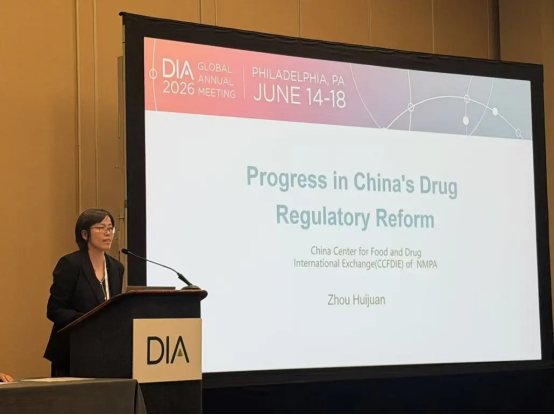
Image text and data — DIA 2026 presentation: regulatory reform
The slide is titled Progress in China's Drug Regulatory Reform, presented by Zhou Huijuan of CCFDIE, NMPA. The header identifies the DIA Global Annual Meeting in Philadelphia, 14–18 June 2026.
Zhou Huijuan, exchange department, China Center for Food and Drug International Exchange
Professor Chen Xiaoyuan of Tsinghua University School of Medicine reviewed the evolution of China's clinical-trial landscape from 2015 to 2025. She described the decade as a pivotal period of rapid development, with substantial advances in trial scale, resources, capabilities and the policy environment.
According to the data Professor Chen presented, the number of trials in China had grown steadily over the preceding decade and represented 50% of the global total in 2025. Nearly 90% of trials sponsored by Chinese companies were conducted in mainland China, reflecting continuing domestic innovation. Meanwhile, the proportion of multinational-company MRCTs conducted in China had risen from 2% in 2015 to 11% in 2025, indicating greater Chinese participation in, and attractiveness to, international multiregional trials.
The number of registered clinical-trial institutions had increased steadily. Established centres such as Beijing, Shanghai and Guangdong remained prominent, while Chengdu, Wuhan and Shenzhen were emerging rapidly. The principal-investigator workforce had expanded, although the top 50 experienced investigators still accounted for a large share of trials, indicating a concentration of specialist expertise. Study-start-up times had shortened considerably in both oncology and non-oncology trials, with particularly strong gains in Phase I. Recruitment efficiency in Chinese Phase I oncology trials was reported as 1.0 patient per site per month, compared with 0.3 globally.
Professor Chen also reviewed recent clinical-trial initiatives. For certain innovative medicines and MRCTs led by Chinese investigators, new policies reduced clinical-trial application review to 30 days, improving development start-up efficiency. She described three parallel routes for clinical research in China: the conventional investigational new drug (IND) registration pathway; investigator-initiated post-marketing studies (IITs); and the new-biotechnology pathway established under Document No. 818. These routes were intended to support high-quality clinical research and innovation.
Professor Chen concluded that the past decade's changes reflected both regulatory reform and industry investment, and suggested China would become an increasingly important centre in the global network for innovative-drug development. Continued improvements in review efficiency and clinical capabilities could provide patients worldwide with more high-quality clinical evidence and innovative treatments.
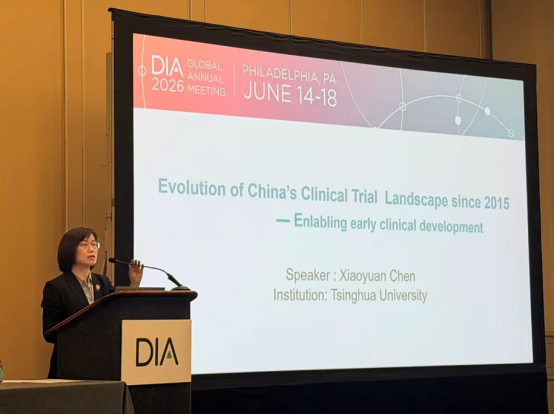
Image text and data — DIA 2026 presentation: the clinical-trial landscape
The slide is titled Evolution of China's Clinical Trial Landscape since 2015—Enabling Early Clinical Development, presented by Xiaoyuan Chen of Tsinghua University. The header identifies the DIA Global Annual Meeting in Philadelphia, 14–18 June 2026.
Chen Xiaoyuan, Professor, Tsinghua University
During the expert discussion, Dr. Zhang Wei, Senior Vice President and Head of R&D and Medical Affairs for Greater China at Boehringer Ingelheim, and Dr. Qinghua Wang, Founder, Chairman and CEO of Innogen, offered perspectives on corporate strategy from a multinational company and a Chinese biotechnology innovator respectively.
Dr. Zhang said companies needed to put innovation at the centre of their response to increasingly intense global competition, pursue new therapeutic modalities and innovative practices, and build competitiveness internationally. He emphasised that Chinese companies expanding overseas should balance international growth with a sustained focus on China and domestic commercial success. He also called for stronger government support for innovation arising from academic research, including basic research and early proof of concept, to help companies secure essential resources for long-term development.
Drawing on domestic innovation, Dr. Wang argued that innovation should begin with patients' actual needs, particularly in chronic conditions such as metabolic diseases, with the goal of effective, safe, convenient and affordable long-term health services. He said Chinese companies should work to global technical standards from the outset and independently establish comprehensive clinical-research, CMC (chemistry, manufacturing and controls), QA (quality assurance), and TV systems, which the source describes as therapeutic validation, with clear clinical evidence and value guiding development. For international expansion, Dr. Wang recommended conducting international trials in emerging markets, both to test whether Chinese clinical data generalise to other populations and to support overseas market development and international competitiveness.
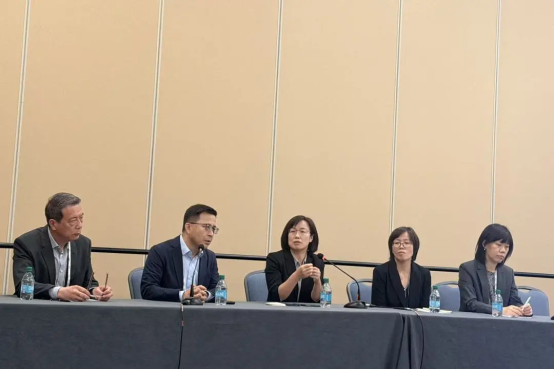
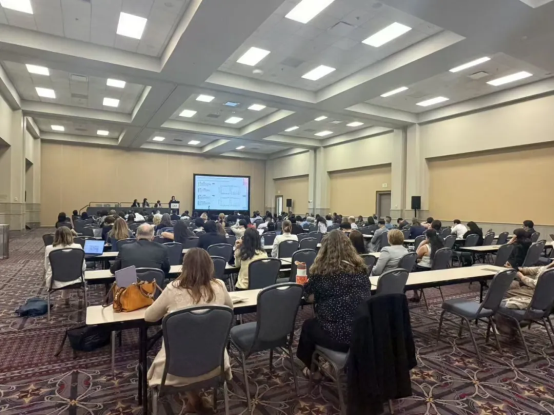
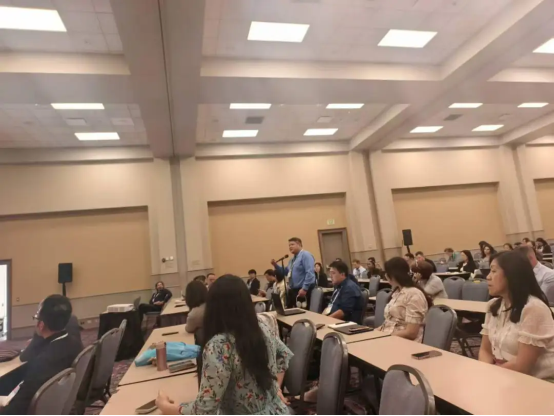
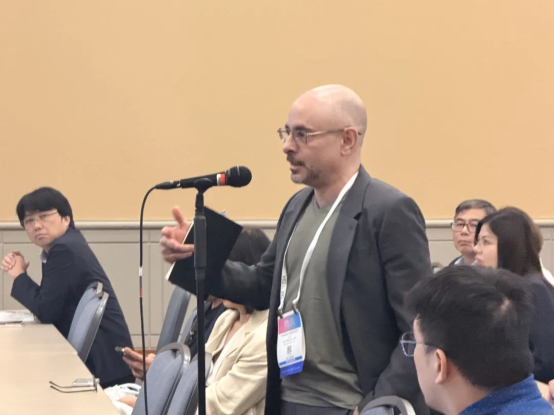
Participants said China was becoming both a contributor to regulatory rules and a reference point for efficiency, in addition to being a market. The pace of regulatory alignment, the maturity of clinical resources and policy support for innovation were creating opportunities for pharmaceutical companies worldwide. Overseas innovators were showing growing interest in China, particularly in early clinical development; one overseas start-up leader said at the event that they hoped to establish a company in China to advance clinical development more quickly.
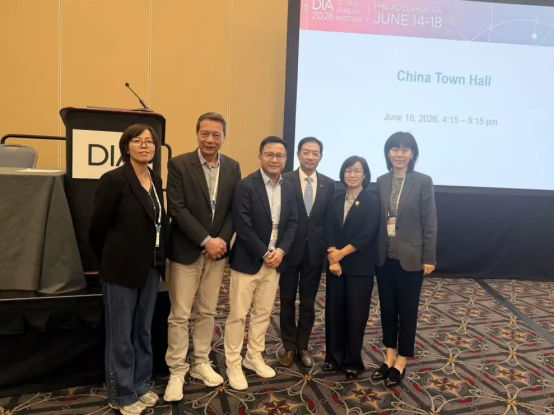
Image text and data — DIA 2026 China Town Hall session time
The group-photograph backdrop identifies the China Town Hall on 16 June 2026, 4:15–5:15 pm, within the DIA Global Annual Meeting in Philadelphia, 14–18 June 2026.
From left: Zhou Huijuan, Qinghua Wang, Zhang Wei, Ling Su, Chen Xiaoyuan and Shi Hui.
The DIA Global Annual Meeting also held regulatory sessions for the US FDA, European Medicines Agency, UK MHRA, Health Canada and Brazil's ANVISA, along with sessions on Japan, the Middle East, Indonesia, India and other countries and regions.
Article source: Drug Information Association, Shanghai Representative Office.