GLP-1 receptor activity
GLP-1 receptor activation promotes glucose-dependent insulin secretion and suppresses glucagon release.

Science & research
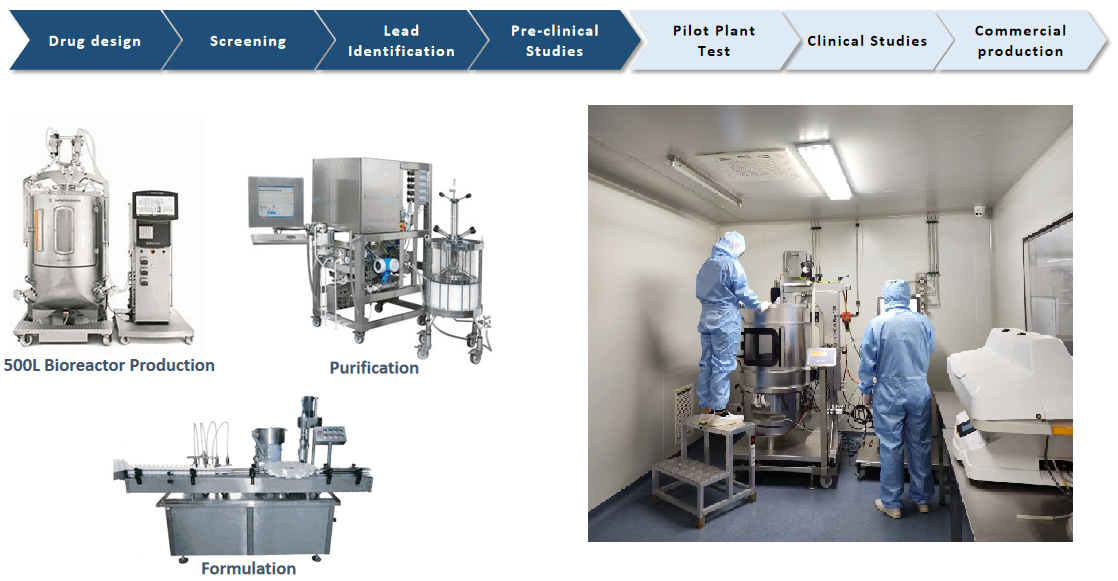
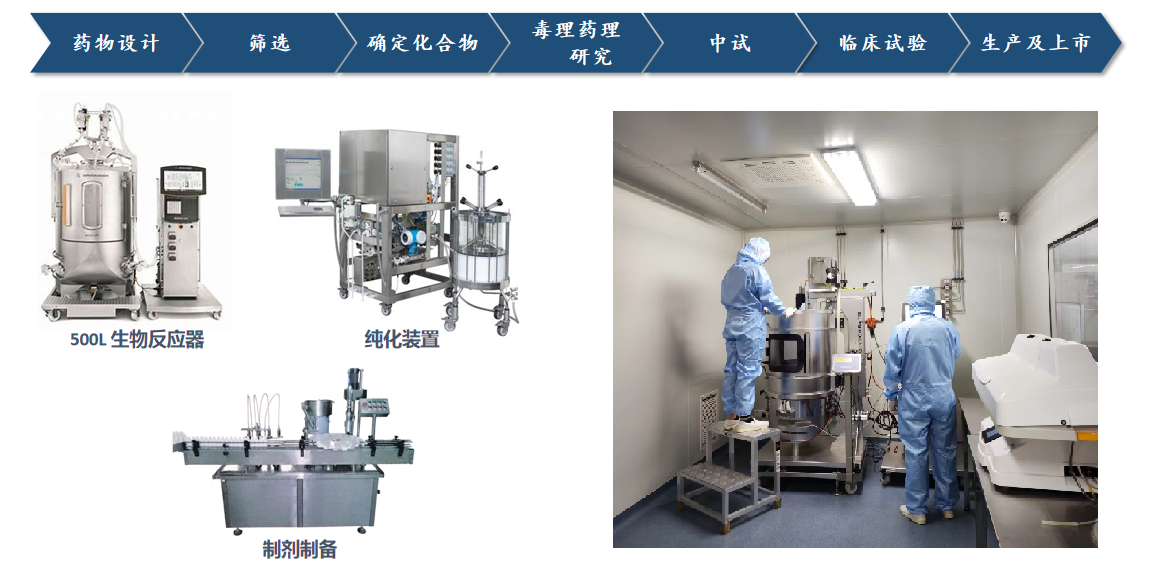
Our proprietary recombinant-protein platform connects molecular design and candidate screening with preclinical research, clinical development and manufacturing processes. Efsubaglutide alfa is the first marketed medicine developed through this work.
Our recombinant fusion-protein platform
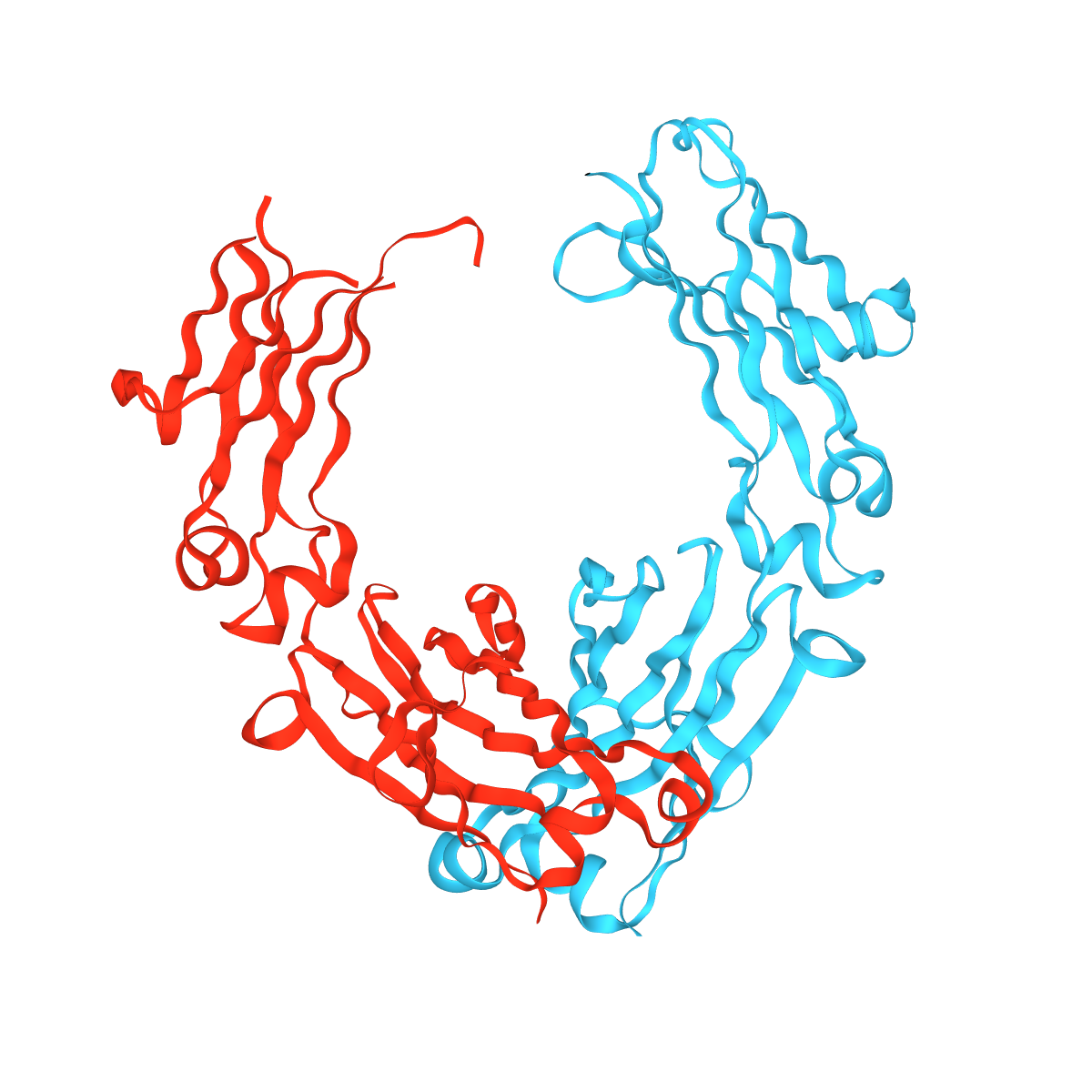
Native GLP-1 is rapidly degraded in the body. Innogen’s GLP-1/IgG2 Fc fusion design aims to preserve GLP-1 receptor activity while extending its duration of action.
A long-acting GLP-1 receptor agonist
Simplified fusion-protein schematic; not to scale. Published schematic ↗
GLP-1 receptor activation promotes glucose-dependent insulin secretion and suppresses glucagon release.
The fusion design aims to reduce enzymatic breakdown and kidney clearance, and to prolong circulation through FcRn-mediated recycling.
Foundational research · 2010
Rat insulinoma INS-1 cells
At 0 minutes, the red signal is mainly at the cell surface. After 10 minutes at 37°C, the authors observed more signal inside the cells, supporting uptake of the bound fusion protein.
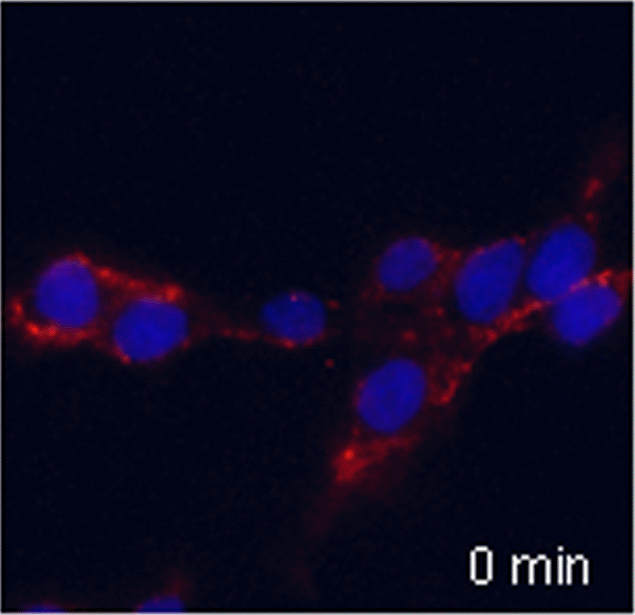
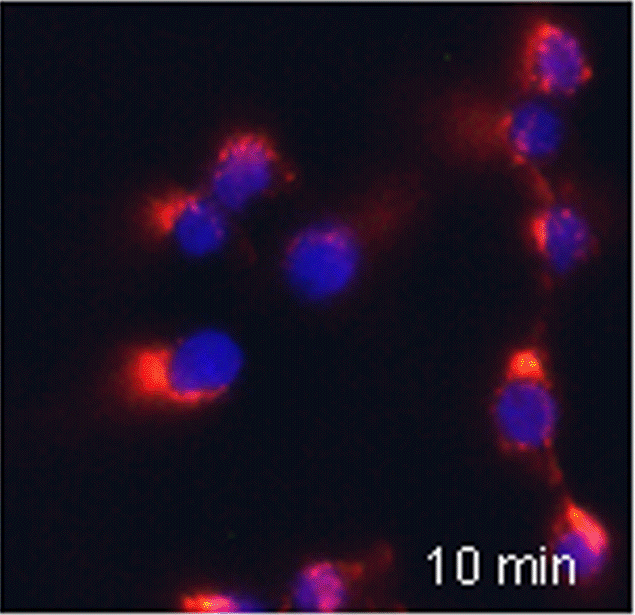
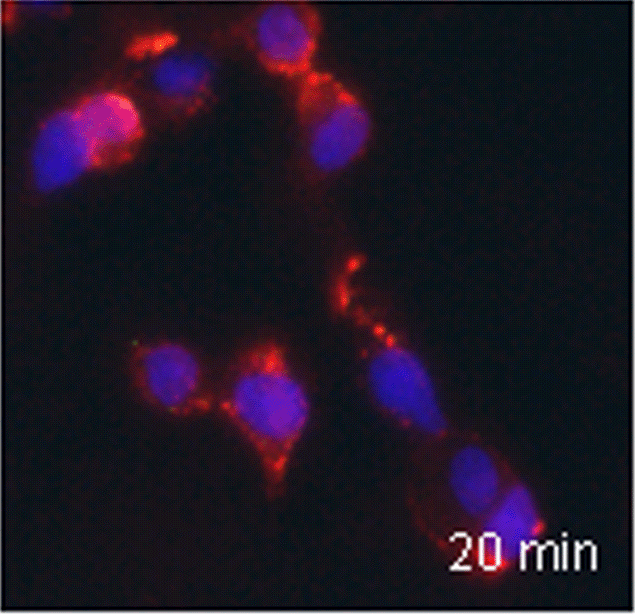
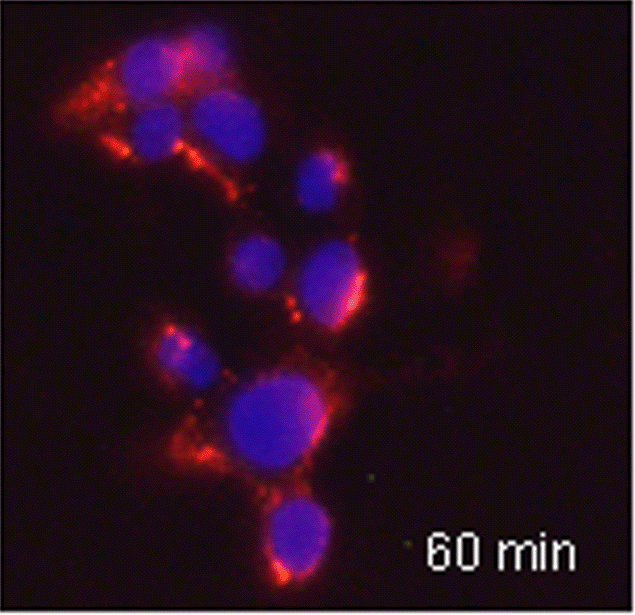
Red: GLP-1/hIgG2 staining · Blue: nuclei
Each timepoint shows separately fixed cells, rather than the same cells followed over time. This experiment examines cell uptake; it does not measure duration of action in the body or effects in people.
As described in the Figure 3 caption, INS-1 cells were incubated with 1 μM GLP-1/hIgG2 at 4°C for 30 minutes, then moved to 37°C. Cells were fixed and stained at 0, 10, 20 and 60 minutes and imaged by confocal microscopy. All four panels from Figure 3A are shown here.
A 2010 cell and mouse study tested whether GLP-1/IgG2 fusion could retain receptor activity and extend its action. Improved glucose tolerance was still observed in mice one week after a single injection. The study predates Innogen; the company identifies continuing work on this approach as part of the scientific foundation for its later drug development.
Efsubaglutide alfa progressed from molecular design and process development through clinical studies to commercial manufacturing.
Clinical evidence
Efsubaglutide alfa is approved for adult type 2 diabetes in mainland China and Macao. The studies below examine monotherapy, treatment added to metformin, dosing intervals, weight management and glucose control after treatment stops; further uses and regimens remain investigational.
The randomised, double-blind, placebo-controlled Phase IIb/III trial enrolled adults with type 2 diabetes inadequately controlled on metformin. The Phase III stage randomised 344 new participants to efsubaglutide alfa 3 mg weekly or placebo, both added to metformin.
The Phase IIb stage compared doses before 3 mg was selected for Phase III. At week 24, mixed-meal testing found lower glucose responses and higher insulin and C-peptide responses with efsubaglutide alfa than with placebo, consistent with improved β-cell secretory function during treatment.
Read the full study ↗Primary endpoint · week 24
Percentage points
Estimated treatment difference: −1.06 percentage points (95% CI −1.37 to −0.74).
Common adverse events were gastrointestinal, mostly mild to moderate. The comparator was placebo; the study does not establish comparative efficacy or safety against another active medicine. See the paper for full methods, results and safety data.
Clinical research questions
SUPER 1 and SUPER 2 examine monotherapy and add-on treatment. Further studies explore dosing intervals, weight management and disease status after treatment. The study settings are outlined below; current development status is shown in the pipeline.
Glycaemic control · Monotherapy
People with type 2 diabetes who had not previously received glucose-lowering medicines.
Examines glycaemic control after 24 weeks of once-weekly monotherapy, alongside safety and tolerability.
A randomised, double-blind, placebo-controlled phase 2b/3 trial, published online in Diabetologia in November 2025. It examines monotherapy, unlike SUPER 2’s metformin background therapy.
Glycaemic control · Add-on to metformin
People with type 2 diabetes whose glycaemia remained inadequately controlled on metformin.
Compares efsubaglutide alfa with placebo alongside metformin, assessing HbA1c and post-meal glucose, insulin and C-peptide responses.
Randomised, double-blind, two-stage adaptive phase 2b/3 trial, published in Nature Communications in 2026.
Dosing interval · Every two weeks
59 adults with type 2 diabetes inadequately controlled by lifestyle intervention.
After a one-week 1 mg run-in, compares 12 weeks of 3 mg every two weeks with 1 mg weekly using HbA1c and continuous glucose monitoring.
Published in November 2025, this multicentre, randomised, open-label study found similar glycaemic improvements. Its small sample, short follow-up and descriptive statistical comparisons do not establish equivalence between regimens. Current regulatory progress is shown in the pipeline.
Weight management · Dose and regimen research
People with overweight or obesity; ENLIGHT enrolled adults without diabetes.
Moves from LIGHT 1 phase 2a dose exploration to ENLIGHT phase 2b weekly and every-two-week regimens, assessing weight, body composition and safety.
The randomised, double-blind, placebo-controlled LIGHT 1 phase 2a paper was published in January 2026. ENLIGHT phase 2b results were reported as an ADA 2026 poster abstract. Weight management remains investigational.
Glucose control after treatment stops
29 participants entered follow-up after completing 52 weeks of weekly treatment in SUPER 1 with HbA1c ≤7.0%. They had not used glucose-lowering medicines before SUPER 1.
Follows participants for 52 weeks without glucose-lowering medicines, defining remission as HbA1c <6.5% measured at least three months after treatment stops.
The observational follow-up, published in January 2026, reported remission in 12 of 20 participants included in the three-month analysis (60%). This small, selected group of treatment responders cannot establish a remission rate for all patients. It is separate from SUPER 2’s functional assessments during treatment.
Approved and commercially launched in mainland China and Macao. Mainland approval includes monotherapy or treatment with metformin.
Adult Phase III research in China, Phase II in Australia and adolescent Phase Ib research in China are distinct programs. These uses remain investigational.
A supplemental application for dosing every two weeks in adult type 2 diabetes was accepted in July 2026. Acceptance is not approval; formulation research is listed separately among early programs.
Development status: interim results announcement, 25 August 2026. Original disclosure ↗
Innogen develops its pipeline independently and reports global commercial rights for every disclosed program. Development status is listed by indication, territory and dosing regimen.
18 development entries
Innogen’s first marketed medicine, with further research into new uses, patient groups and dosing schedules.
Chinese mainland
Approved and commercially launched for adult type 2 diabetes, as monotherapy or with metformin; included in the NRDL from 1 January 2026.
Macao, China
Approved in June 2025; commercially launched in September 2025.
Brazil
Submission or acceptance is not marketing approval.
Biologics licence application submitted in September 2025.
Chinese mainland
Submission or acceptance is not marketing approval.
Once every two weeks; proposed supplemental regimen
A supplemental application for dosing once every two weeks was accepted in July 2026.
Chinese mainland
Weekly and every-two-week dosing under investigation
Phase III; 30-week follow-up for the primary efficacy endpoint completed in July 2026.
Australia
Weekly, every-two-week and every-four-week dosing under investigation
Phase II; database locked in July 2026.
Chinese mainland
Phase Ib; first participant enrolled and dosed on 28 July 2026.
China and United States
Permits a clinical trial; not marketing approval.
The FDA cleared an IND for a Phase IIa study in March 2023; NMPA IND approval for the same indication followed in March 2025. The Group reports that it is prioritising selected next-generation early-stage programs, including differentiated fusion proteins intended to address broader disease mechanisms in MASH.
Early research in weight management, MASH, type 1 diabetes and Alzheimer’s disease, alongside long-acting formulation technology.
GCGRi/GLP-1
GCGRi: Glucagon receptor inhibitor
Development territory not disclosed
Apelin/GLP-1
Development territory not disclosed
GHS-Ri
GHS-Ri: Growth hormone secretagogue receptor inhibitor
Development territory not disclosed
Ultra-long-acting formulation
Development territory not disclosed
Myokine/GLP-1
Development territory not disclosed
FGF21/GLP-1
FGF21: Fibroblast growth factor 21
Development territory not disclosed
Neuron–microglia-specific target
Development territory not disclosed
β-cell-specific target
Development territory not disclosed
Studies of efsubaglutide alfa in feline type 2 diabetes and obesity.
GLP-1
China
Phase I; clinical studies ongoing.
China
Phase I; clinical studies ongoing.
A medicine can be studied in different populations, indications and dosing regimens. The pipeline shows progress by program and territory, with approved uses distinguished from investigational uses.
Entries distinguish indications, dosing regimens and territories. IND clearance permits a clinical trial; submission or acceptance of an application is not marketing approval.
Commercial rights and regulatory status are shown separately. Global commercial rights do not mean a medicine has marketing approval in every territory. 2026 interim results announcement ↗
Further research
Recombinant protein engineering underpins Innogen’s research. Work on longer-acting delivery, computational modelling and experimental validation extends that foundation into drug development.
We design and screen candidate molecules addressing GLP-1 and other metabolic pathways. Early programs include Apelin/GLP-1, FGF21/GLP-1 and Myokine/GLP-1 approaches.
Injectable hydrogel research explores longer dosing intervals. Published work uses cell and animal models and does not establish a human dosing interval or approved regimen.
Read about the hydrogel research →In its 2026 interim results, Innogen described work on an AI-enabled discovery platform connecting target identification and validation, computational molecular design and laboratory evaluation. The intended scope runs from early discovery to preclinical candidate selection, including fusion proteins and peptides.
2026 interim results: technology platform ↗Research library
Early GLP-1 fusion-protein studies, clinical trials and emerging delivery technologies.
Diabetologia
This two-stage study enrolled adults with newly diagnosed type 2 diabetes who had not used glucose-lowering medicines. Following phase 2b dose selection, phase 3 randomised 297 participants to weekly 1 mg, 3 mg or placebo. Both doses reduced HbA1c more than placebo at week 24. Adverse events were mainly mild-to-moderate gastrointestinal events.
Placebo-controlled results in previously untreated participants do not establish superiority over other glucose-lowering medicines. Figure 2d has been corrected in the linked article.
Nature Communications
Adults with type 2 diabetes inadequately controlled on metformin received weekly 3 mg or placebo in phase 3; both groups continued metformin. At week 24, HbA1c fell by 1.80 versus 0.74 percentage points. Mixed-meal testing at week 24 found lower glucose responses and higher insulin and C-peptide responses with efsubaglutide alfa than with placebo, consistent with improved β-cell secretory function during treatment. Adverse events were mainly mild-to-moderate gastrointestinal events.
The study included a 24-week placebo-controlled period and a 28-week open-label extension, with metformin as background treatment. Follow-up cannot fully establish rare-event safety or long-term efficacy.
Diabetes, Obesity and Metabolism
This multicentre study enrolled 59 adults whose glucose remained inadequately controlled with lifestyle intervention. After a one-week 1 mg run-in, the groups received either 3 mg every two weeks or 1 mg weekly for 12 weeks. HbA1c reductions and continuous glucose monitoring measures were similar between groups. Adverse events were mainly mild-to-moderate gastrointestinal events.
The trial was small, short and open-label; its descriptive statistics do not establish equivalence between regimens. Every-two-week dosing remains investigational, and acceptance of a supplemental application is not approval.
Diabetes, Obesity and Metabolism
This randomised, double-blind, placebo-controlled phase 2a study enrolled 50 adults with overweight or obesity who had not responded adequately to lifestyle intervention. It explored weekly target doses of 5, 7.5, 10, 15 and 20 mg, with escalation every two weeks followed by four weeks at the target dose. Greater weight reduction was observed with efsubaglutide alfa. Gastrointestinal events were mainly mild to moderate and occurred primarily during escalation.
This small, early dose-finding study cannot establish long-term weight loss or safety. Both fat and lean mass decreased, so it does not establish muscle preservation. Obesity remains an investigational use.
Diabetes · ADA 2026, 2636-P
This randomised, double-blind, placebo-controlled study assessed 18 weeks of treatment, including dose escalation. Weight changed by −10.58% with 20 mg weekly, −9.70% with 20 mg every two weeks and −3.61% with placebo. Results were presented as a poster abstract at ADA 2026.
This is a conference abstract, rather than a complete clinical paper. Obesity and the studied regimens remain investigational.
Advances in Therapy
The study enrolled 29 SUPER 1 participants who had been drug-naive before treatment, completed 52 weeks of efsubaglutide alfa and reached HbA1c ≤7.0%. They stopped all glucose-lowering medicines and entered a 52-week follow-up. In the three-month analysis, 12 of 20 participants met the remission criterion: HbA1c <6.5% measured at least three months after the last dose.
This was a small, selected observational cohort. The three-month result uses a denominator of 20, not all 29 enrollees; it does not establish the likelihood of remission for all patients or show that diabetes has been cured.
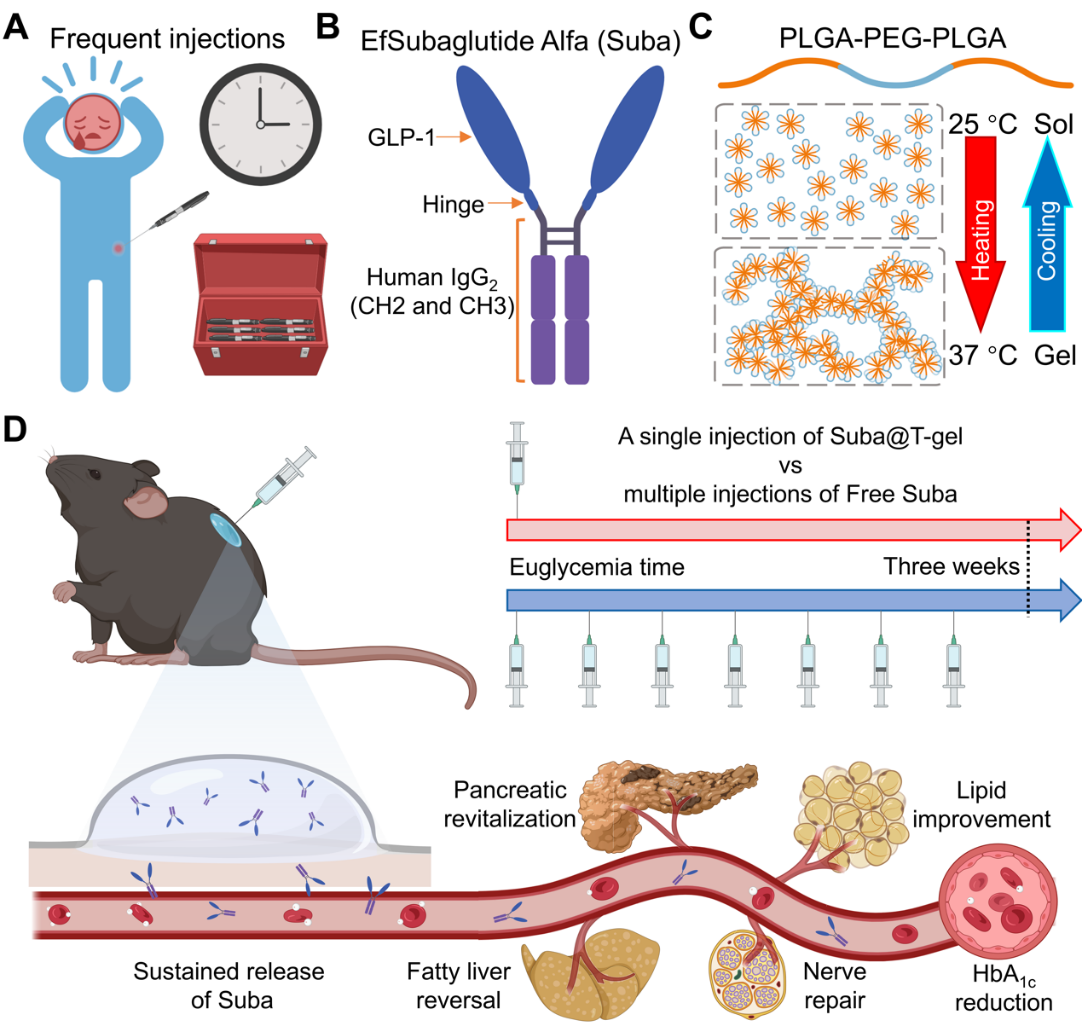
Theranostics · 16(4):1833–1854
Innogen and Fudan University researchers incorporated efsubaglutide alfa into a biodegradable, temperature-responsive hydrogel. A single subcutaneous injection maintained glucose control for about three weeks in diabetic mice, with improvements in islet function, lipid metabolism and related tissue measures.
These findings come from animal research. Whether this hydrogel formulation could support monthly dosing in people still requires larger-animal and clinical studies.
Diabetes, Obesity and Metabolism
A 42-day mouse study used a high-fat diet and carbon tetrachloride to model MASH. Groups received vehicle, obeticholic acid, semaglutide or different efsubaglutide alfa doses. Efsubaglutide alfa improved liver steatosis, liver enzymes and selected collagen-imaging measures.
Sirius Red fibrosis area and scores did not differ significantly between treatment groups; collagen-imaging findings require longer studies.
Cells · 15(6):507
Gérald J. Prud’homme and Qinghua Wang review links between Klotho and the hallmarks of ageing, including inflammation, mitochondrial function, cellular senescence and injury across organs. They examine pathways including NF-κB and NLRP3 and identify directions for translational research.
The review synthesises existing research and reports no new clinical-trial data. The authors identify a lack of clinical investigation of direct Klotho therapy.
PLOS ONE · 5(9):e12734
Qinghua Wang and colleagues showed receptor binding and insulin secretion in cells. Mice retained improved glucose tolerance one week after a single injection, providing early experimental support for a long-acting GLP-1 fusion protein.
Published before Innogen’s 2014 founding, this is cell and animal evidence rather than clinical efficacy data for the marketed medicine.
Medicine resources