
The China Town Hall was recently held during the DIA Global Annual Meeting 2026 in Philadelphia, United States. Participants discussed China’s innovative pharmaceutical industry, alignment with international regulatory standards, global clinical development and market access. DIA expert Dr Ling Su chaired the meeting, a representative of the China Center for Food and Drug International Exchange delivered a keynote, and representatives of multinational and Chinese innovative pharmaceutical companies contributed presentations and discussion.
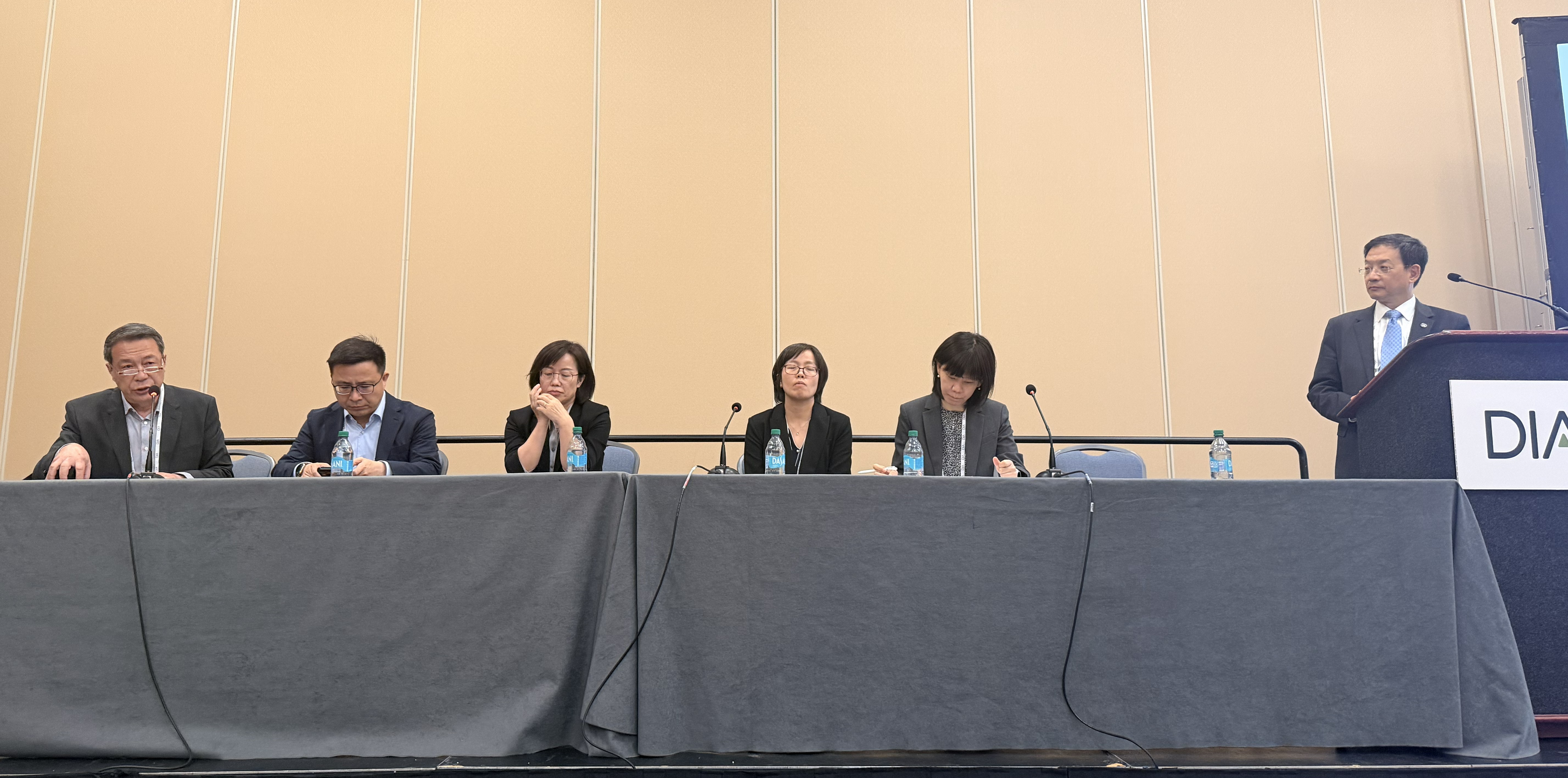
Representing a Chinese innovative pharmaceutical company in the panel discussion, Innogen shared its work in original metabolic disease research, global clinical development and international commercial planning. The company said China’s biopharmaceutical industry has rapidly progressed from a foundation in generics and biosimilars to become a significant force in global innovation, with a growing place in the clinical development pipeline. In this setting, sustained success depends on original science, international technical standards and clear clinical value as well as development speed.
Innogen’s history illustrates the effort to create original medicines in China. Although founded in 2014, the company traces its founder’s work on GLP-1 biology back more than two decades, before the first GLP-1 receptor agonist reached the market. Building on this research, recombinant fusion-protein engineering was used to extend GLP-1 activity, eventually leading to the company’s core product, efsubaglutide alfa.
Efsubaglutide alfa is Innogen’s internally developed humanised, ultra-long-acting GLP-1 receptor agonist, designed for more sustained exposure and more convenient administration in chronic metabolic disease. It is approved for type 2 diabetes in China. Innogen said its development connects basic discovery, molecular engineering, clinical development and approval, illustrating continuing progress in original Chinese metabolic medicines.
Innogen explained that international development requires research and quality systems, clinical evidence and patient value that can withstand international scrutiny, beyond the export of a product. Since its founding, the company has developed its clinical, CMC, quality-management and pharmacovigilance systems against international technical standards, with attention to ICH, GCP, GMP, data integrity and benefit–risk assessment.
Alongside Chinese trials, Innogen is investigating metabolic indications internationally, including a Phase II obesity study in Australia and registration-related bridging clinical work for type 2 diabetes in Brazil. Australia’s internationally recognised clinical research environment supports assessment of whether efficacy, safety, tolerability and patient-relevant findings observed in China can be reproduced in broader populations and future global development. Bridging studies in emerging markets such as Brazil support exploration of registration pathways across different regulatory settings and populations, preparing for subsequent access and commercialisation.
Innogen said diabetes and obesity burdens are rising rapidly in South America, South Asia and other emerging markets, while access to innovative treatment remains limited. It sees substantial clinical need and development potential in these regions. Regulatory approval is a first step; product quality, affordability, dependable supply, physician education and long-term safety monitoring must work together. Dosing convenience, adherence and the ability to afford treatment over the long term are also important dimensions of clinical value in chronic metabolic diseases.
The company identified three requirements for sustained success in China’s rapidly developing pharmaceutical sector: innovation must begin with real clinical needs as well as technology; it must meet international technical standards; and it must demonstrate clear clinical value, encompassing statistically significant efficacy and practical value to patients, physicians, payers and healthcare systems.
The China Town Hall provided a forum for Chinese regulatory exchange bodies, multinational businesses and domestic innovators. Innogen said it will continue to draw on original science, international technical standards, patient access and clinical value as it pursues wider international markets for Chinese-origin medicines.
About Innogen
Founded in 2014, Innogen (HK.2591) is a biopharmaceutical company focused on developing and commercialising innovative medicines for metabolic diseases. Its internally developed pipeline covers indications including type 1 diabetes (T1D), obesity, metabolic dysfunction-associated steatohepatitis (MASH) and Alzheimer’s disease (AD), with international intellectual-property rights and a global patent strategy. Its core product, efsubaglutide alfa, is an internally developed, next-generation human-derived ultra-long-acting GLP-1 receptor agonist approved for type 2 diabetes in the Chinese mainland and Macao, China. It is included in the National Basic Medical Insurance, Maternity Insurance and Work Injury Insurance Drug List (2025). The product has entered international development and registration, with the aim of providing better treatment options to patients worldwide. For more information, visit www.innogenpharm.com.
Session details and indication note
The original English article dates the Philadelphia China Town Hall session to 16 June 2026 and identifies Dr. Qinghua Wang, Innogen’s founder, chairman and CEO, as the representative of a Chinese innovative biopharmaceutical company, sharing perspectives on original innovation, global clinical development and international commercialization.
The original English article notes that efsubaglutide alfa was approved only for type 2 diabetes; the obesity indication remained investigational and unapproved. The article is for information only and does not constitute advertising, treatment advice or an efficacy claim. Prescription medicines should be used as directed by a physician. It also explicitly states that efsubaglutide alfa was not approved for obesity or for use outside approved jurisdictions.